Saturday, July 17, 2010

Financial Behavior: Then and Now


\

Financial Behavior: Then and Now

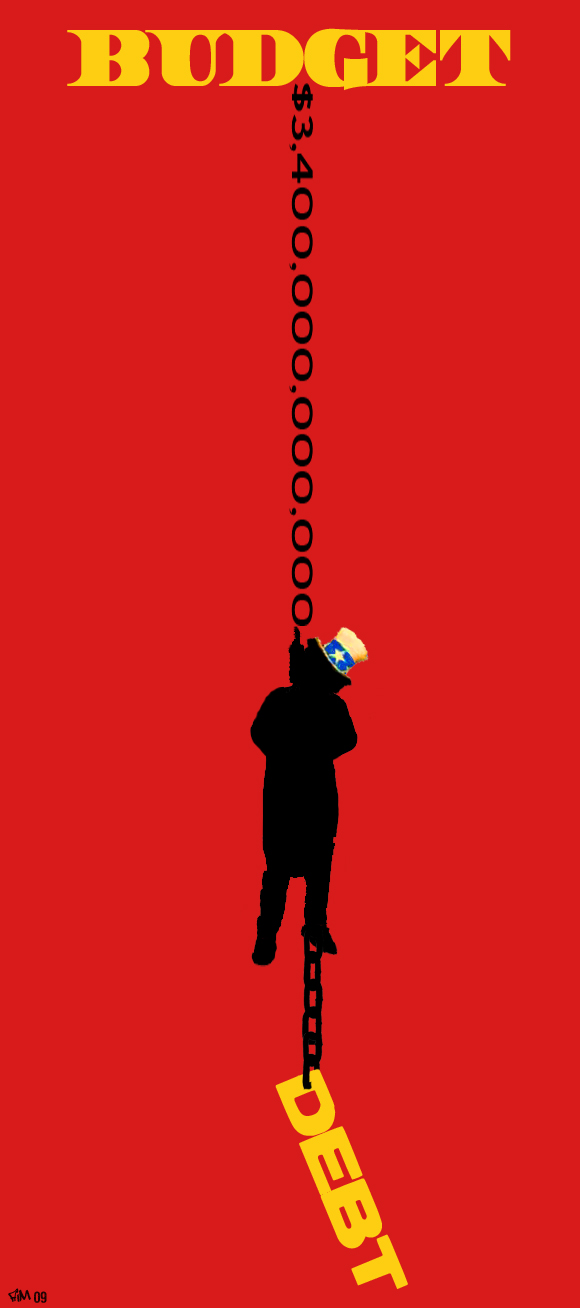
Much has changed in America over the last one hundred years. Corporations have come and gone, Wall Street has had its ups and downs, and every year brings us a new standard for fashion in clothing. Additionally, the American mentality itself has shifted on almost every level from diet to finances. The average American has evolved in their philosophy of money and how they handle it. But is it a good evolution? Are we climbing the so-called evolutionary ladder, or are we getting caught up in harmful mutations? Or worse, are we de-evolving in our understanding of financial principles? To fully understand this, we must track our progress and see what the last one hundred years have brought us. How did our grandparents and great-grandparents handle money?

In 1910 the Sears, Roebuck, and Co. Catalogue contained the following line, “...buying on credit is folly.” (D. Ramsey, “Dumping Debt”, 2008) In 1922 Henry Ford, said in his book, “My Life and Work”, “…another rock on which business breaks is debt.” Later on he declared, “…most, would bestir themselves very little were it not for the pressure of debt obligations. If so, they are not free men and will not work from free motives. The debt motive is, basically, a slave motive.” (“Quotes by and about Henry Ford”, http://www.abelard.org/ford/ford4_quotes.php) These quotes give us a glimpse of the pre-1950 mentality regarding money. Debt was regarded as foolish, or even a sin (D.Ramsey), and many of that generation were fondly remembered for “saving for a rainy day” despite what they may have wanted at the time. In the 1930s during the depression there was in fact a negative savings rate, but it was largely based on the need to survive, rather than a desire for wealth and luxury. The Bureau of Economic Analysis in this year’s National Income and Product Accounts Table reports that the average savings rate after the Second World War was nearly 10%, and during the war it rose to as high as 16%. What this means is that saving was considered a necessary and prudent part of life by our grandparents, and our great-grandparents. It was simply the responsible thing to do. But the paradigm was already beginning to shift by the end of the 1950s.

In early 1958 Frank McNamara created the first credit card known as “Diner’s Club” (Wikipedia). After the war America had become prosperous and after pinching and hanging on by so little for so the long the desire to have their day in the sun was strong. By 1960 Americans had charged over $340 million of today’s dollars on their newfound credit cards. By 1970 the bill was 7 billion dollars spent via credit card, with an unbelievable 22% delinquency rate. (“Just one Word: Plastic” http://money.cnn.com/magazines/fortune/fortune_archive/2004/02/23/362195/index.htm) The credit card age had arrived with bang and it was almost instantly an industry measured in billions, not millions. The discipline was sliding away. The splurge had started.

Meanwhile, personal debt continued to steadily climb from 1950 to 1965 but began to taper off by the early 1970s. In the late 70s, the debt trend began to rise yet again, but still the ratio of debt-to-income was below 60%. What this essentially means is that for every $100 of income, less than $60 was owed in personal debt. All of this changed in 1985 when the average American owed more than 60% of their income to their debtors. Since then, the trend has increased, with the difference between monies owed and income received reaching an all time low of 0%. (“Is Household Debt too High?”, William R. Emmons, Federal Reserve Bank of St. Louis) Essentially, since the year 2000 Americans have owed just as much as they have spent, or more, and in 2007 Americans had a negative savings rate of 10%. (Ramsey)

Our nation is facing an enormous financial crisis, and these statistics show us the road that has brought us to where we are today. The big question now is “why?” and what does the future hold for our nation?

Between the years after the Second World War and the 80s the idea of personal debt became more and more accepted in the eyes of the public. The creation of the universal credit card and their sudden widespread distribution as well as concept of “keeping up with the Jones’s” began to permeate society. By the 1980s credit cards were fast becoming the norm, and the idea of saving was quickly becoming more and more nonstandard. Suddenly the buzzword of “rainy day” had been replaced by a new buzzword, “leverage” and the idea of borrowing money to get ahead was even being taught in colleges and universities. By the 1990s the new craze was “90 Days Same as Cash” and furniture stores and electronics stores were capitalizing on the fact that 70% of all same-as-cash accounts did not pay off in 90 days. (MoneyCrashers.com, “Stay Away From The “90 Days, Same As Cash” Trap” by Erik Folgate)

All of these ideas pushed an attitude known as “instant gratification”. Whether or not this was intentional was beside the point. The marketing message was still clear: you can have it now. The consumer may have started with the mentality of “I can”, but over time it has shifted to “I must”. Financing, and credit have brought previously unaffordable technology and possessions within our grasp. Humans tend to possess little self-control and the sudden ease of purchasing an item without cash proved to be a fatal combination. An example of this is seen at a simple fast food outlet, McDonald’s. Not very long ago McDonald’s did not accept credit or debit cards, and their average ticket was under $5 per customer. However after they began accepting debit and credit cards the average order total jumped to over $7 per customer. (Ramsey) Additionally CreditCards.com reports that as of September 2009, there are more than 1 billion credit cards actively in circulation around the world. In 2008, Visa, MasterCard, Discover, and American Express chalked up nearly 2 trillion dollars spent with their cards, an 800 billion dollar increase over 5 years. The long and short of these statistics is that Americans simply cannot say “no” and increasingly so as time goes on. It is this kind of mentality that has brought us to the place where more Americans declare bankruptcy every year than graduate from college. (PBS.org “Affluenza…Diagnosis” http://www.pbs.org/kcts/affluenza/diag/what.html)

What then does the future hold? Ultimately the marketplace has only aided the shift from responsibility of our grandparents to the instant gratification of our current generation. As the market has brought us newer cars, nicer houses, and more desirable goods, it has also brought us a way to attain these things instantly without any sense of actually earning the things we want. A free market can and does generate the most desirable goods and a great amount of wealth in the process. How that is handled is neither the fault of the goods or the marketplace, the responsibility lies solely at the feet of the consumer. The market will always rise to meet the demands of the consumer, and that the market delivers instant lines of credit and 90-days-same-as-cash only reflects on the consumer as being willing and ready to use such devices to afford luxuries that are perhaps beyond their means. Ultimately the consumer is the one with the buying power and it is their choice as to how they use that power. The last 45 years have been a slow road to financial depravity because of willful ignorance on the part of the consumer, but if educated the consumer could be a much greater force to be reckoned with. Our task is to clean up the mess we have made and teach the next generation what our grandparents knew all along: discipline and responsibility are the keys to true wealth.

Monday, July 13, 2009

The Newcomer

I scrape away at the last few letters when I hear a shout.
Through the chaos and din I see a figure stumble towards me in the dark. Ahh. Yes. The Newcomer.
“Y...you! You there!” he rasps, his voice a collage of 50 years of smoking and a choking sound. I doubt mine sounds better.
“Yeah?”
“What...why...I don't understand.”
I sigh. It always starts like this.
“It is the same for all of us. The same Reason.”
He looks around, bewildered, his mind unable to comprehend what lies before him. He looks familiar.
“Weren't you that-?”
“Like it matters now?” he raspily screams. “As if any of it ever mattered! The ranch! The fame! Any of it! I'd give any of it for something as simple as a cup of water. And I'll be damned if...” He cuts himself off, laughing maniacally, then surging into hysterics ending in sobs. I hear a subtle sound amongst the din, and I hope it is my imagination. He is cut short by another sound, one not nearly as subtle. An unearthly (for so it is) scream and a howl. His eyes grow maddeningly wider.
“What-what is that?”
“They cannot get us...for now.”
He looks around, trembling in terror. “For...now?” I nod. “I do believe they will be set free at some point...to feed on us.” He looks at me as if I am a lunatic. I suppose it is true.
“They're going to eat us?”
“I guess you could say that. But that has such finality to it, so I prefer 'feed' instead.”
I hear the subtle sound again, louder this time. It is not my imagination. I edge closer to the wall. They are coming.
“Those aren't-?”
“Yes. I am afraid they are.”
“NO!” He screams. “No!” He may have had a beautiful voice before, but nothing is beautiful here. The wet, gnawing sound draws closer and he loses his nerve and runs through the flames. “No! I won't – Oh God!” His cry is drown out in his own screams as the worms get him. I may see him again later. I return to my carving, the words of a song I once heard.

Give me more darkness said the blind man,
Give me more folly said the fool,
Give me stone silence said the deaf man,
I didn't believe Sunday School.

The worms are almost here now. It's the way of things here. I will have to finish after--I shudder. Every time is as bad as the first. But I have time to finish, all the time in the...no.
I have forever to finish. The thought consumes me, just as the worms do amidst the sound of a ghastly screaming. My own.

Monday, June 1, 2009

What they deserve


Two of the simplest words you can say to someone are two of the words that are rarely said to anyone anymore. Much worse is the fact that those most deserving to hear them seem to hear them the least.

When I met Arnold he was living in what was known as shabby part of town in a rented two-bedroom house. I don't know what his pension was but judging from the condition of the paint and the shingles it wasn't much. But he was friendly enough, and invited me in so I could plan his internet installation. His furniture was old and shabby—which matched the carpet and the rest of the house nicely, but it was the place he called home. Models of aircraft from days gone by adorned the out of style end-tables and the worn out shelves. I noticed a painting of “The Wall” also known as the Vietnam Veterans Memorial. As I ran cable outside he and I began to talk of his service days. As an enlisted man in the army he was crew chief on a chopper in Viet Nam, which also meant that he was a door gunner. Any amount of research will reveal that the life expectancy of a chopper crew was not conducive to making pension. Yet here he was, years later telling me of a tracer round that came through their open window as bullets pinged off the chopper during one of their sorties. I paused as he grew silent and then I turned to him and said,

“Well, sir, it wasn't a very popular war and I don't imagine you've heard this much, but thank you for doing what you did for our country.” He nodded slowly and said, “Thank you, that means a lot. And you are right, I haven't heard it much.” He paused again. “Maybe three times in the last twenty-five years.”

As I sit and reflect on this my emotions still rise in my chest. The intense sorrow of knowing that so few rose to fight, but fewer still rose to thank them. So many poured out their blood, yet so few of us can pour out our thanks. Dissent, protests, hate, spit, and slogans against our vets and troops is not patriotism. It is despicable. Being thankful is patriotic.

You will see them in the grocery store, the mall, your school, your town. You will recognize the uniform first, but I hope you will learn to recognize what that the uniform is indicative of: a heart of service and patriotism. And although your pride will kick and scream, although your comfort will be momentarily denied, put your ego aside for one moment in eternity and walk up to that soldier and thank them. Their pride screams for their action, their comfort is nonexistent when they are sent to the far side of the globe, and their ego is tied to their unit to the point of using their bodies as shields for their fellow soldiers.

So take a second, just a second, walk up and look them in the eye and tell them that you are thankful and appreciative of what they've done for you, and for your country. You may never get another chance to tell them, and it may be the last time they hear it. It's the least you can do, and it's the least they deserve.

Tuesday, February 24, 2009

For what do we cry?


I am caught up on something.

Recently while watching something on tv, I heard a bit of dialogue that has stuck with me and is most grievous. The setting is ancient Rome, and a man seeking public office is presented with the fact that his election is sure; his opponents are straw candidates. An honest man, he is irritated at the lack of freedom, honesty, and fairness in the political structure. As he voices his concerns the man who is telling him these things says, “Rome does not cry out for freedom. The people do not cry out for fair elections. They cry out for jobs. For bread. For someone to care for them.”

I have no doubt butchered the exact wording, but the message holds it's meaning. Like the Roman Prefect, I too am deeply troubled.

In this day and age we have forgotten ourselves in our selfish desires. We are facing foreclosures, financial woes, and domestic insecurity as we've not seen for the better part of 70 years. Why?

Selfishness and greed perhaps? We have desired houses that are bigger—bigger than our paychecks justify. We have desired cars that are nicer—nicer than our checkbooks can afford. We have used the moneys of Visa, MasterCard, and Discover to purchase the things we must afford, the delicacies we must indulge ourselves on and the trophies of modern sophistication. We have used our good name, our credit, to afford these vapors of pleasure. The money for these was never really there to begin with. Our name became greater than the number at the bottom of our net worth column. And our good name has run out. Our name is no longer “good” for anything, save for a reference point for collectors to contact us. Is the bank the villain? Surely they should not have lent us the funds we so desired! What greed motivated them to try for a percentage of interest off of our spending habits, habits so fueled and driven as to guarantee good return? Yet...

what greed motivated us to the point of “needing” so many things? What senselessness took us that we sent ourselves spiraling into more debt that we might spend our home equity on our trophy flatscreens, and long “deserved” vacations in exotic places? What madness is this that permeates the mind and allows justification of a vehicle or vehicles that exceed the ability of our income to support? Why must we drive the least efficient, the most unreliable, and the most exceedingly over-priced vehicles? Why does our pride extend so far past our actual monetary abilities?

Faced with these difficulties problems that we have incubated, nurtured, and justified, what have we done? These seeds of greed and irresponsibility have come to fruition. Where are we at harvest time?

We are nowhere to be found. We will not say it is our desires, our greed, our motivation for more that has brought us to this point. We cannot. We will not allow ourselves. There should be a law, a statute, more regulation of banks, anything, anything but admit our failure to act like men.

We find ourselves beggared by our own lust for the pride of life. And so we come.

We come to the feet of a politician. And we plead for release and exoneration from our actions. We cannot face the unthinkable: the consequences of our monetary philanderings.

Our grandparents were reduced to bread lines and soup kitchens for years. They were subjected to true hunger, and true need, and true poverty. In light of our misbehavior, they did not deserve the harshness of the Great Depression. But they survived. Made do. Fought on. And they stepped up and did what was necessary, and what was demanded of them as responsible adults. And they brought forth the Greatest Generation from their trial. But us? We cower. We kneel and beg that we not be reduced to a soup line. Oh please, most powerful politician, please rescue us! Please save us from our idiocy and childish behavior! Be merciful to us! We do not wish to answer for our actions, so we wheedle and cry.

We think ourselves above the laws of nature, of sowing and reaping, and unintended consequences.

They are responding to our demands to reach out and save us. They are going to make atonement for us at the market in the world economy. They will cover our shame and lunacy. But in exchange for what?

What will we give them in exchange for saving us from ourselves? We are not demanding freedom.

We are not demanding truth. We are not demanding true fairness of getting all that which we signed for. We are demanding jobs. And bread. Someone to care for us. They are ever willing to give these to us.

But at what price? When will we realize the true cost of paying the piper?

Wednesday, January 21, 2009

Savior


Amongst the thronging crowds, the parades, the endless inaugural balls, the speeches, poems, and millions of spectators, I think the masses have forgotten something.
Something painfully poignant and obvious in the photograph. Something that we all know, yet it would seem fewer and fewer people actually believe it. The reality?
Barack Hussein Obama is a man. A speck of existance on a planet with 7 billion specks of existance. Nothing more. His power ends at the rule of law. It is quite possible there is nothing to be done for the economy. It is possible that again we will again be attacked by terrorists, and with greater force and magnitude than we have seen before. It is possible for fires, earthquakes, hurricanes and tornadoes to rip the country with in every corner of it's borders. Calamity may come upon us, through no fault of our own.
Yet somehow, we have convinced ourselves that one man can save us from these things. It is eerie looking at these pictures and films of the inauguration. People gathered, singing, dancing, cheering, screaming, and erupting in joy and ecstasy. People lifting their hands and shouting. It looks like a pentecostal church service on a mass scale of political exuberance. Why? Because of one man's rise to power. No other reason.
Obama is a man, nothing more. What is unbelievable is the expectation placed upon him by the people of this country. People loved to hate President Bush for Katrina, Iraq, and many other events and decisions of the past, some of which were beyond his control. But what about the future? What if future disaster awaits? What if the economy cannot recover? What if we are attacked again? What if more hurricanes and other natural disasters ravage our cities and our people? Barack Hussein Obama cannot stand in the way of these things any more than President Bush or the other 42 presidents of our history could.
Looking at these pictures, seeing these films, hearing the songs, watching the audulation, praise, and and excitement it is not hard to see that the masses have elevated this man to something he is not and never will be. And if the events of the future tear at the illusion we have fostered, then will we understand? If hurricanes, riots, fires, wars, and soup lines are in our future than there is little Barack Hussein Obama can do to stop them.
When these things come about, who then will we turn to as our Savior?

Thursday, December 18, 2008

Riding


Riding a motorcycle is something akin to flying in an open cockpit biplane that is powered by a jet engine. You feel everything. Every crack, every raindrop, even dip, bump, gust of wind or bug death against your helmet. You can smell the smoker in the truck two cars ahead of you. You can smell the ocean's saltiness, the grease and fries as you past the restaurants, the exhaust, the lush valleys, the trees, the world around you. There's something exhilarating about it. You are a part of it.

In a strange way, you are more connected with the road on two tires than you ever will be on four.

The road effects you more, it influences your moves and decisions. There's something emotional about it. Your feelings effect your experience, and sometimes you use the experience to effect your feelings.

The road gives nothing freely. Your machine she may forgive you, the road never will. The road may give you and your machine the ride of your life, but she may also give you the ride of your death.

Your machine is your only ally, along with your wits, your wisdom, and your skill. They call riders “Road Warriors”, and it is true. They do battle every time they ride. Not a bludgeoning, clumsy brawl or match, but a graceful combat likened unto a martial art where every move is graceful, beautiful, and lovely in a dark and sinister meaning. It is in this fluidity of movement, physics, speed, and grace that we find the reason we ride. It is the experience that we crave. It is the moving of our souls. It's something man has longed for as long as man has existed, and that is freedom. One might ask why the underlying philosophy and political nature of the motorcyclist genre tends to be bent towards a conservative mindset, and the answer is the understanding of freedom. Freedom from worry, oppression, and restriction. Freedom just to be.

Two wheels move our souls. Four wheels can move the soul, but it takes so much more on the part of the machine. No one's soul is moved in an ordinary car; it takes something of magnificent power and grace to move us while we are enclosed in the frame of an automobile. It takes so much less on the alloy horses of our motorcycles. Even the smaller bikes can and do move our souls to the point where when we put the kickstand down the very thing we long to do is put the stand back up, and let the roar of our machine fill our ears, a grandiose cacophony of a machine working in perfect harmony, performing it's tune like an orchestra of renown, and we the conductor by the will and grace of Providence. For this reason we strive to be better conductors and feel the power of the engine beneath us, it's roar in our ears, the bars in our hands, the curves ahead in our eyes and the freedom that resonates in our souls.

For this we count ourselves fortunate to own the machines we do, and enjoy each day and each road as a grace to us from the hand of Providence. To thank Almighty God for this freedom, perhaps this last freedom we do have to enjoy and make the road our stage, our medium as a means of self-expression of who we are and the freedom that our souls enjoy.